
Live Online for Your Team
A trainer-led virtual session where your team can ask about the substances they actually use.
HEALTH & SAFETY
COSHH training shows your people how to use, store and dispose of hazardous substances safely, as the COSHH Regulations 2002 require. We run it live online for teams, on-site on request anywhere in the UK, or as a IIRSM-approved e-learning course for individuals. Live from £95 + VAT per delegate; e-learning from £35 + VAT.
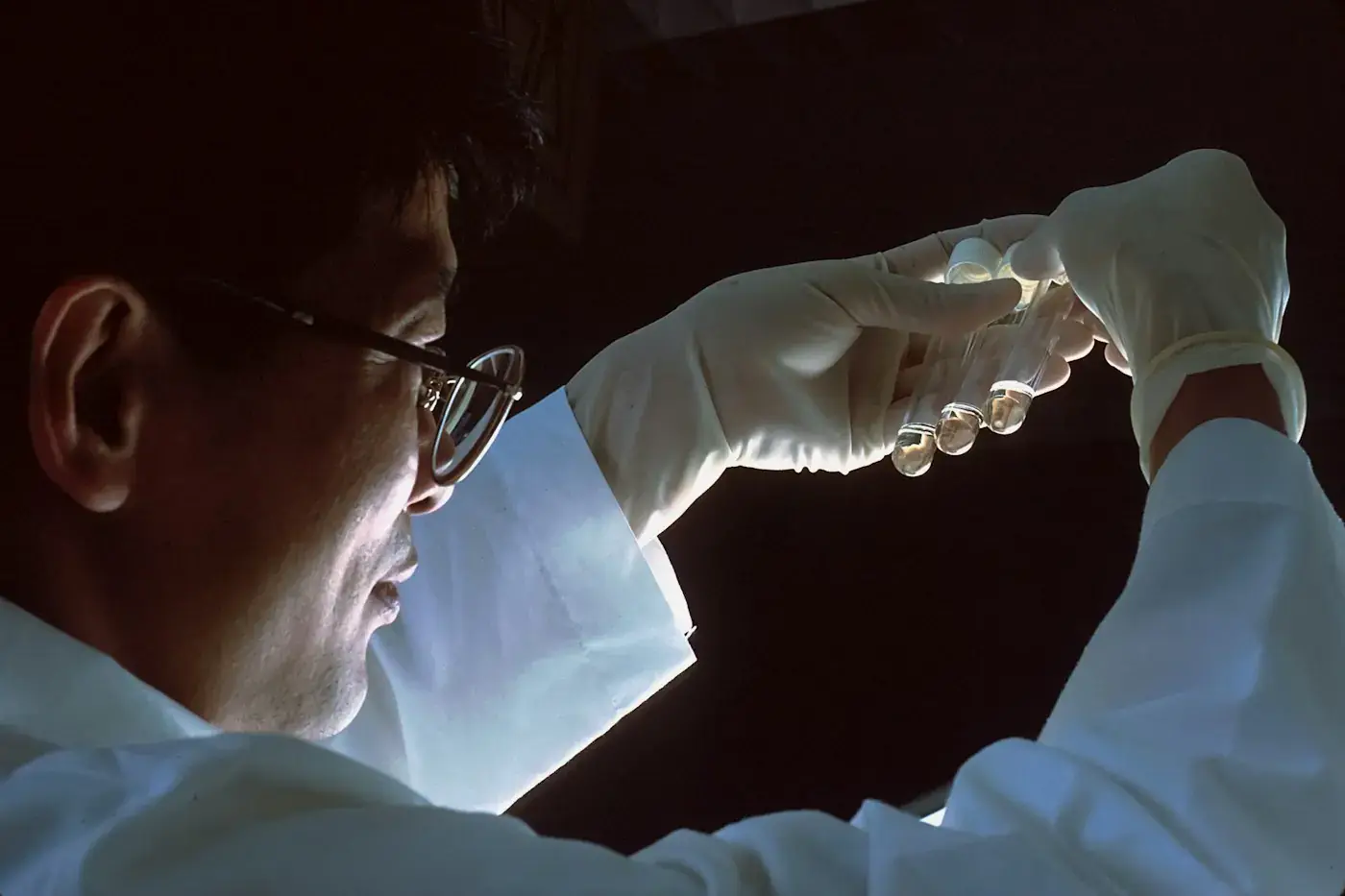
Photo: National Cancer Institute on Unsplash
Yes. Under regulation 12 of the COSHH Regulations 2002, employers must give anyone who may be exposed to hazardous substances suitable information, instruction and training. That covers the risks, the precautions, how to use controls and PPE, and what to do in an emergency.
Anyone who uses, stores or could be exposed to hazardous substances at work: cleaners, carers, maintenance staff, production teams, hairdressers and farm workers, among others. Supervisors who carry out COSHH assessments need a deeper understanding than the people using the products.
Yes, two ways. We run COSHH as a live online session in a virtual classroom, where your team can ask about the products they actually use. For individuals, there’s a IIRSM-approved e-learning course you can start today.
The law doesn’t set a fixed interval. Refresh it whenever substances, processes or controls change, when someone moves role, and at regular intervals so it stays front of mind.
Course facts
Practical, not theoretical. We use the products and tasks your people deal with, so it makes sense the next time they open a cupboard.
The substances in scope: chemicals, fumes, dusts, vapours, mists, gases and biological agents, and the few covered by their own rules (such as asbestos and lead).
How to read the 9 hazard pictograms and find what matters on a safety data sheet, fast.
How a COSHH assessment works, and the order of controls the regulations set: eliminate or substitute, then engineering controls and safe systems at source, then PPE as a last resort.
Decanting, mixing, storing incompatible products apart and getting rid of waste safely.
Choosing, wearing, checking and storing PPE, and why ventilation and extraction come first.
What to do when something goes wrong: spills, splashes, inhalation and first response.
When health checks are needed, spotting early symptoms and reporting them.
Most COSHH exposure isn’t in a laboratory. It’s in a cleaning cupboard, a sluice room or a workshop, with products people use every day without a second thought.
We tailor sessions to the products on your shelves. Cleaning teams learn why mixing two everyday products can be dangerous. Care teams cover cleaning chemicals, medicines and infection control. Workshop teams cover fumes, dusts and oils. For care settings, see our care sector training.
Popular with:
Photo: Jimmy Nilsson Masth on Unsplash
Choose live training for a team who need to talk through their own products, or e-learning for one or two people who need certifying quickly.
“She delivers her training courses with so much enthusiasm and vigour... you can't fail to enjoy the day and remain engaged throughout. A real talent for reading the room.”
CLARITY
Most substances hazardous to health: chemicals and products containing them, fumes, dusts, vapours, mists, gases and biological agents such as bacteria. Asbestos, lead and radioactive substances have their own regulations. HSE’s COSHH basics has the full definition.
They’re the red-diamond pictograms on product labels: explosive, flammable, oxidising, gas under pressure, corrosive, acute toxicity, health hazard (exclamation mark), serious health hazard, and hazardous to the environment. Our training covers what each one means for the person using the product.
Yes. Cleaning products are one of the most common sources of exposure at work, and cleaners are exactly who the COSHH Regulations are designed to protect. We run COSHH sessions for cleaning teams using the products on their own trolleys.
A COSHH assessment is the employer’s written check of each hazardous substance and how it’s controlled. COSHH training makes sure the people using those substances understand the risks and follow the controls. You need both. Our risk assessment training helps supervisors with the assessment side.
Yes. COSHH applies to every employer, whatever their size, if their work involves substances that could harm health. A small cleaning company or care home has the same duty as a large manufacturer.
Tell us how many people need COSHH training and what kind of substances they work with. We’ll reply within one working day with options and a price.
FREE GUIDES
Tell us who handles hazardous substances in your business and we’ll recommend live, on-site or e-learning, with a price, within one working day.
Get a QuoteWe reply within one working day.