
What Does COSHH Stand For?
COSHH stands for Control of Substances Hazardous to Health. It is the everyday name for the Control of Substances Hazardous to Health Regulations 2002 (SI 2002/2677), which have been amended several times since, most notably by the 2004 amendment that introduced workplace exposure limits from April 2005.
The regulations sit under the Health and Safety at Work etc. Act 1974, which sets the general duty to protect people at work. COSHH turns that general duty into specific steps for one kind of risk: harm to health from substances people use, make or are exposed to at work.
COSHH applies in England, Scotland and Wales and is enforced by the HSE and local authorities. Northern Ireland has its own near-identical version, the Control of Substances Hazardous to Health Regulations (Northern Ireland) 2003, enforced by HSENI.
People often say “COSHH” when they mean the cupboard, the data sheet, the assessment or the training. They are all part of it, but strictly COSHH is the law, and everything else is how you comply with it.
What Counts as a Hazardous Substance Under COSHH?
Far more than most people expect. The HSE’s definition covers:
- chemicals, and products containing chemicals (cleaning products, paints, adhesives, solvents)
- fumes, such as welding fume
- dusts, such as wood dust, flour dust and silica dust from cutting stone or concrete
- vapours and mists
- gases, including asphyxiating gases such as nitrogen in a confined space
- nanotechnology materials
- biological agents (germs), such as those that cause leptospirosis or Legionnaires’ disease
The regulations themselves define it in more formal terms. A substance or mixture is covered if it meets the criteria for any health hazard class under the chemical classification rules (GB CLP), whether or not it has been classified; if it has a workplace exposure limit; if it is a biological agent; if it is any dust at or above 10 mg/m³ (inhalable) or 4 mg/m³ (respirable) averaged over eight hours; or if it otherwise creates a risk to health because of its chemical or toxicological properties and the way it is used or present at work.
That last part matters. A substance does not need a hazard symbol to fall under COSHH. Flour dust in a bakery and wood dust in a joinery workshop come in sacks or off a saw, not in a labelled bottle, but both can cause serious harm and both are covered.
What COSHH Does Not Cover
The HSE is clear that COSHH does not cover lead, asbestos or radioactive substances, because each has its own regulations: the Control of Lead at Work Regulations 2002, the Control of Asbestos Regulations 2012 and the Ionising Radiations Regulations 2017.
COSHH is also about harm to health. It does not apply where a substance is hazardous only because it is flammable, explosive, very hot or cold, or under high pressure. The risk of a substance catching fire or exploding is dealt with under the Dangerous Substances and Explosive Atmospheres Regulations 2002 (DSEAR). Plenty of products are both, so in practice your assessment often looks at both. Medicines given to a patient as treatment are not a COSHH issue for that patient, but the staff who prepare or handle hazardous medicines can be exposed, so they are.
Who Does COSHH Apply To?
Every employer whose work could expose employees, or anyone else affected by the work, to a hazardous substance. Size is no exemption. A two-person cleaning company has the same duty to assess and control its chemicals as a large manufacturer. Self-employed people doing certain higher-risk kinds of work have duties too.
Most of the duties sit with the employer. Employees have their own duties under regulation 8, covered further down. Anyone who supplies a substance has separate duties under the chemical labelling law (GB CLP) to classify and label it and, for hazardous products, to provide a safety data sheet under UK REACH.
What Must Employers Do Under COSHH?
The table above sums up the duties. Here is what each one means in practice.
Assess the Risks (Regulation 6)
You must not carry out work that could expose employees to a hazardous substance until you have made a suitable and sufficient assessment of the risk and the steps needed to meet the regulations, and put those steps in place. If you have five or more employees, record the significant findings and the steps you have taken to meet regulation 7. Review the assessment regularly, and straight away if there is reason to think it is no longer valid, if the work changes significantly, or if the results of exposure monitoring show it is needed.
Prevent or Adequately Control Exposure (Regulation 7)
This is the heart of COSHH. Your first duty is to prevent exposure. If that is not reasonably practicable, you must adequately control it. Substitution, replacing the substance or process with a safer one, is the preferred way to prevent exposure. The order of controls is covered in the section on the hierarchy of control below.
Make Sure Controls Are Used (Regulation 8)
Controls only work when people use them. Employers must take all reasonable steps to make sure every control measure, item of PPE and facility is properly used. Employees must use them and report defects.
Maintain, Examine and Test Controls (Regulation 9)
Controls must be kept in an efficient state, in efficient working order, in good repair and clean. Local exhaust ventilation (LEV), such as extraction on a welding bench or a spray booth, must have a thorough examination and test at least every 14 months, and more often for the few processes listed in Schedule 4. Reusable respiratory protective equipment must be examined at suitable intervals too. Keep records of the examinations and tests, and any repairs made as a result, for at least five years. PPE must be stored in a set place, checked at suitable intervals, and repaired or replaced when defective.
Monitor Exposure (Regulation 10)
Where the assessment shows it is needed to keep control adequate or to protect health, you must measure how much people are exposed to, for example by air sampling, at regular intervals and when anything changes. Records that show identifiable employees’ personal exposures are kept for at least 40 years from the last entry; others for at least five.
Provide Health Surveillance (Regulation 11)
Health surveillance means regular checks to spot early signs of work-related ill health, such as skin checks for dermatitis or lung function tests for occupational asthma. It is required where exposure could cause an identifiable disease or health effect, it is reasonably likely to happen under your working conditions, and there are valid ways to detect it. For the few substances and processes listed in Schedule 6, such as vinyl chloride manufacture, it must include medical surveillance by a doctor at least every 12 months. Health records are kept for at least 40 years from the last entry.
Give Information, Instruction and Training (Regulation 12)
Anyone liable to be exposed must get suitable and sufficient information, instruction and training. That includes the substances they work with and their hazards, any exposure limits, access to the safety data sheets, the significant findings of the assessment, the precautions they must take, and the results of monitoring and (collectively) of health surveillance. This is the regulation COSHH training is designed to meet.
Plan for Accidents and Emergencies (Regulation 13)
Where there is a risk of an accident, incident or emergency involving a hazardous substance, such as a serious spill or a release of gas, you need procedures in place before it happens. That includes first aid facilities, relevant safety drills tested at regular intervals, warning and communication systems, and information on your arrangements for the emergency services. This duty does not apply where the quantities on site mean the risk is only slight and your controls are enough to deal with it.
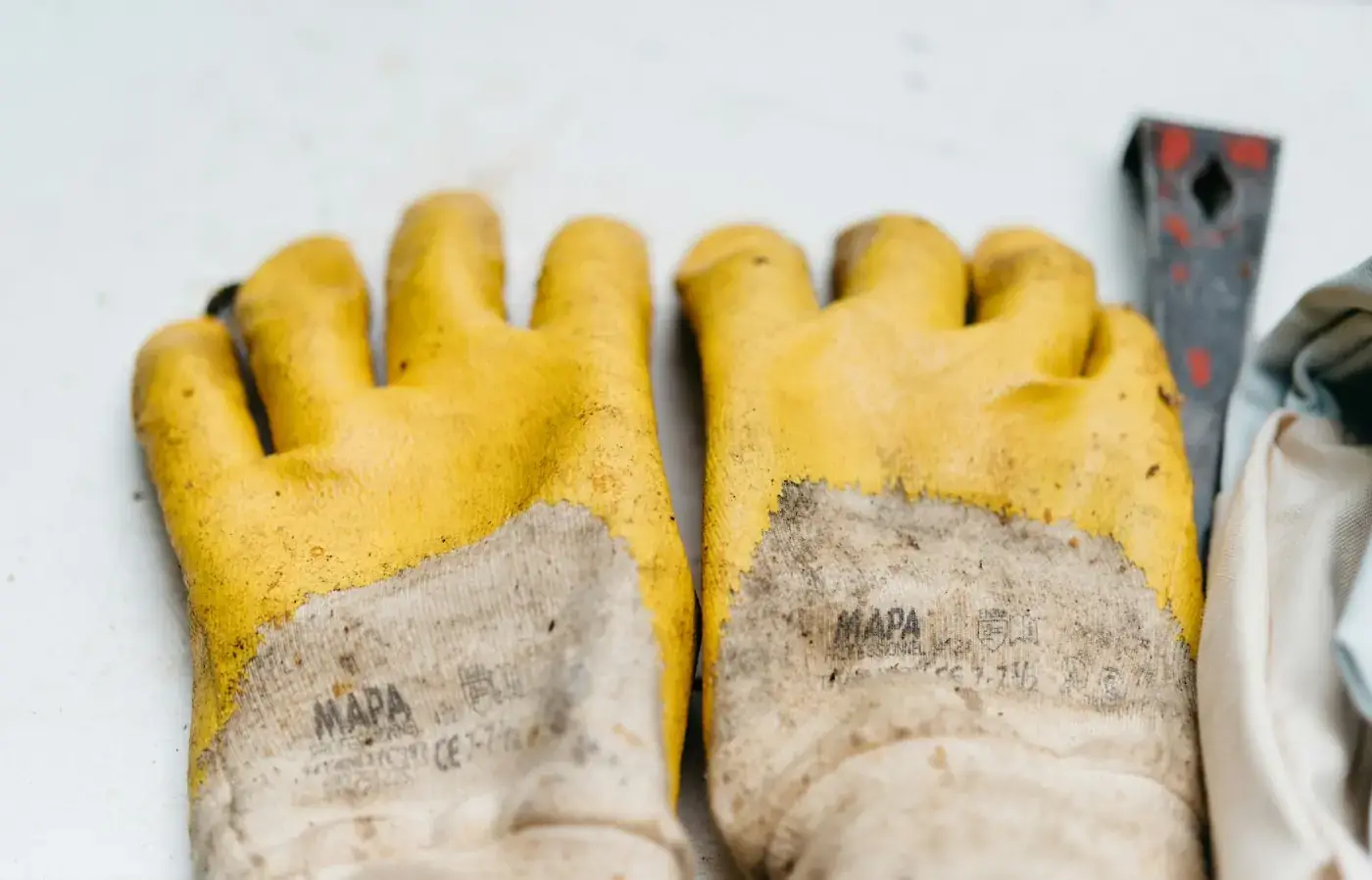
Photo: Roman Kraft on Unsplash
What Is a COSHH Assessment and How Do You Do One?
A COSHH assessment is the employer’s written check of a hazardous substance (or a task that creates one, like sanding or welding): what harm it can do, who could be exposed and how, whether the current controls are good enough, and what else is needed.
It follows the same logic as any risk assessment using the HSE’s five steps. The HSE’s COSHH assessment guidance breaks it down like this:
- Identify hazards. List the substances used or produced. Read the product labels and safety data sheets, and ask the supplier if you are unsure. Do not forget substances created by the work itself, such as dust, fume or vapour.
- Assess the risks. Decide who might be harmed and how. Think about the route of exposure (breathing it in, getting it on or through the skin, or swallowing it), how often, for how long and in what quantities. Include cleaners, maintenance workers, contractors, visitors and members of the public, and people with extra risk, such as new and expectant mothers.
- Control the risks. Can you avoid the substance altogether? If not, are your controls adequate? Work through the hierarchy of control below.
- Record your findings. Required if you have five or more employees. Our free COSHH assessment template, below this guide, has a section for each part.
- Review the controls. Check they are still working and revisit the assessment regularly, and when anything changes: a new product, a new process, a health complaint or a near miss.
Assess the task, not just the bottle. The same bleach carries a very different risk when it is used diluted on a mop than when someone decants it from a large drum in a small cupboard.
What Is the Hierarchy of Control for Hazardous Substances?
Regulation 7 sets out the order to work through. Start at the top and only drop down when the step above is not reasonably practicable:
- Eliminate or substitute. Stop using the substance, change the process, or switch to a safer product or form. A paste instead of a powder, a water-based product instead of a solvent-based one, pellets instead of dust.
- Use appropriate work processes, systems and engineering controls. Enclose the process, use closed transfer systems, use suitable equipment and materials.
- Control exposure at source. Extraction at the point of release (LEV), good general ventilation, and organisational measures such as fewer people in the area, shorter tasks and smaller quantities.
- Provide suitable PPE. Gloves, eye protection, overalls and respiratory protective equipment, used in addition to the other measures where adequate control cannot be achieved by other means.
Regulation 7 also requires safe arrangements for handling, storing and transporting hazardous substances and waste, suitable maintenance procedures, keeping the number of people exposed, the level and length of exposure and the quantities on site to the minimum the work needs, appropriate general ventilation, and good hygiene such as adequate washing facilities.
The Principles of Good Practice
Control only counts as “adequate” if you apply the eight principles of good practice in Schedule 2A, keep exposure below any workplace exposure limit, and (for substances that can cause cancer, genetic damage or asthma) reduce exposure as low as is reasonably practicable. In summary, the eight principles are:
- design and operate processes to minimise the emission, release and spread of substances
- take account of all relevant routes of exposure: inhalation, skin absorption and ingestion
- control exposure by measures proportionate to the health risk
- choose the most effective and reliable controls that minimise escape and spread
- where adequate control cannot be achieved by other means, provide suitable PPE in combination with other controls
- check and review all elements of your controls regularly for their continuing effectiveness
- inform and train all employees on the hazards, the risks and how to use the controls
- make sure new controls do not increase the overall risk to health and safety
What Are Workplace Exposure Limits (EH40)?
A workplace exposure limit (WEL) is the maximum concentration of a substance that people may breathe in, averaged over a set period. The HSE publishes them in EH40/2005 Workplace exposure limits, which is updated when limits change, so always check the current edition.
There are two kinds of limit:
- a long-term limit, averaged over eight hours, to protect against effects that build up over time
- a short-term limit, averaged over 15 minutes, to protect against effects that can happen within minutes, such as eye or airway irritation
Two things catch people out. First, a WEL is a ceiling, not a target: you still have to apply the principles of good practice, and for carcinogens, mutagens and asthmagens you must get exposure as low as reasonably practicable. Second, most substances do not have a WEL at all, and that does not make them safe. No limit means you rely on the assessment and the controls.
What Is a COSHH Data Sheet?
The “COSHH data sheet” people talk about is the safety data sheet (SDS). By law, suppliers must provide an up-to-date one for chemicals that are dangerous for supply, and it is usually the starting point for your assessment. It follows a standard 16-section format, and the most useful parts for a COSHH assessment are:
- Section 2: hazard identification, including the pictograms, signal word and hazard statements
- Section 4: first aid measures
- Section 6: what to do about accidental release (spills)
- Section 7: safe handling and storage
- Section 8: exposure controls and personal protection, including any exposure limits and the PPE needed
- Section 13: disposal considerations
An SDS describes the product, not your workplace. It tells you what the substance can do; your COSHH assessment works out what it means for the way your people use it. The label carries the short version: the red-diamond COSHH symbols, the signal word (“Danger” or “Warning”) and the hazard and precautionary statements.
COSHH in Common Workplaces
COSHH is not just for laboratories and factories. Some of the most common exposures happen in ordinary workplaces with ordinary products.
Cleaning and Facilities
Cleaning products are one of the most common sources of exposure at work. The big risks are skin damage from wet work and detergents, eye splashes when decanting, and gases released when products are mixed. Mixing bleach (sodium hypochlorite) with acidic products, including some toilet cleaners, releases chlorine gas. The HSE has COSHH guidance for the cleaning industry.
Care Homes and Healthcare
Care teams handle cleaning chemicals and disinfectants, and are exposed to biological agents from body fluids and infections. Some medicines, such as cytotoxic drugs, need specific controls for the staff who handle them. Frequent hand washing and glove use also make dermatitis a real risk. Our care sector training covers COSHH in a care setting.
Agriculture
Farms use cleaning chemicals, disinfectants, fertilisers, pesticides and veterinary medicines, and work creates welding fume, grain and poultry dust, and gases in silos and slurry pits. Workers can also be exposed to biological agents such as bacteria and fungi, including zoonoses, diseases passed from animals to people. The HSE covers these in its COSHH in agriculture guidance.
Workshops, Manufacturing and Maintenance
Here the hazards are often created by the work itself: welding fume, wood dust, silica dust from cutting, metalworking fluids, solvent vapours and isocyanate paints in vehicle spray shops. These are the places where LEV, its 14-month examination and health surveillance most often apply. Since 2019 the HSE has treated all welding fume, including fume from mild steel, as able to cause lung cancer. General ventilation on its own is not enough: indoor welding needs engineering controls such as LEV, with RPE where LEV alone does not control the fume, and welding outdoors needs suitable RPE.
What Are Employees’ Responsibilities Under COSHH?
Regulation 8 puts duties on employees too. Anyone who works with hazardous substances must:
- make full and proper use of any control measure, PPE or facility provided
- return PPE to its proper storage after use
- report any defect in a control measure or PPE to the employer straight away
Under the Health and Safety at Work Act, employees must also take reasonable care of themselves and others and cooperate with their employer. In plain terms: follow the assessment, use the extraction, wear the gloves, do not mix products, and speak up when something is broken or a product makes you unwell.
What Happens If You Do Not Comply With COSHH?
Breaching COSHH is a criminal offence under the Health and Safety at Work Act. The HSE says inspectors from the HSE or the local authority can give advice, serve an improvement notice (fix this by a set date) or a prohibition notice (stop this activity now), and prosecute.
Under Schedule 3A of the Act, a conviction in the higher courts can bring an unlimited fine and, for many offences, up to two years in prison. Individual directors and managers can be prosecuted as well as the company. And beyond the courts, the real cost of poor control is people with asthma, dermatitis or cancer caused by their work, plus the civil claims, sick leave and lost staff that follow.
What to Do Next
If COSHH has been on the “must sort out” list for a while, this week:
- Walk round with a notepad and list every hazardous substance on site, including dusts and fumes the work creates. That list is the start of your COSHH register.
- Get the safety data sheet for every product on the list. If you are missing one, ask the supplier.
- Pick the highest-risk task and do a COSHH assessment for it using the free template below.
- Check the controls you rely on actually work: when was the extraction last tested, and are the gloves the right type for the chemical?
- Make sure your people know the hazards and the precautions, because regulation 12 says they must.
For the training part, we run COSHH training live online for teams, on-site on request, or as a CPD-accredited e-learning course for individuals. To understand the labels your team sees every day, read our guide to COSHH symbols.