

What Does RIDDOR Stand For?
RIDDOR stands for the Reporting of Injuries, Diseases and Dangerous Occurrences Regulations 2013. The regulations came into force on 1 October 2013 and replaced the 1995 version. They apply across Great Britain (Northern Ireland has its own rules, covered below).
The reports tell the enforcing authorities (the HSE and local councils) about serious incidents, so they can spot trends and investigate the worst. A RIDDOR report is not an admission of liability. Failing to make one, when you should have, is a criminal offence under the Health and Safety at Work Act 1974.
If your managers are unsure what counts and who reports it, that usually points to a wider training gap, which our health and safety training is built to close.
What Is RIDDOR Reportable?
Not every accident at work is reportable. To count, it has to be work-related: caused by the way the work was organised, supervised or carried out, the machinery, equipment or substances used, or the condition of the premises. An act of non-consensual physical violence against a person at work counts too.
If it is work-related, these are reportable:
- Deaths. Any death of a worker or a member of the public caused by a work-related accident (except suicides).
- Specified injuries to workers. A fixed list of serious injuries, below.
- Over-seven-day injuries. A worker is away from work, or can’t do their normal duties, for more than seven consecutive days after the accident. Don’t count the day of the accident, but do count weekends and rest days.
- Injuries to non-workers. A member of the public, visitor or customer is taken straight from the scene to hospital for treatment. Being taken to hospital purely as a precaution, with no treatment, does not count.
- Occupational diseases. Certain diseases, when a doctor diagnoses them in writing and they are likely to have been caused or made worse by the person’s work.
- Dangerous occurrences. Listed near misses that could have caused serious harm, even if nobody was hurt.
Most road traffic accidents are not reportable under RIDDOR, unless they involve loading or unloading, work alongside the road such as roadworks, an escape of a substance from the vehicle, or a train. Accidents during medical or dental treatment are also excluded. HSE’s RIDDOR exemptions page lists the exceptions in full.
What Counts as a Specified Injury?
Regulation 4 of RIDDOR lists the specified injuries to workers that must be reported:
- a fracture diagnosed by a doctor, other than to fingers, thumbs and toes
- an amputation of an arm, hand, finger, thumb, leg, foot or toe
- any injury diagnosed by a doctor as likely to cause permanent blinding, or reduced sight, in one or both eyes
- a crush injury to the head or torso that causes damage to the brain or internal organs in the chest or abdomen
- a burn (including scalding) covering more than 10% of the whole body’s surface area, or causing significant damage to the eyes, respiratory system or other vital organs
- any degree of scalping that needs hospital treatment
- loss of consciousness caused by a head injury or asphyxia
- any other injury from working in an enclosed space that leads to hypothermia or heat-induced illness, or needs resuscitation or admission to hospital for more than 24 hours
A broken finger is not a specified injury. But if it keeps someone off normal duties for more than seven days, it becomes an over-seven-day injury and still has to be reported.
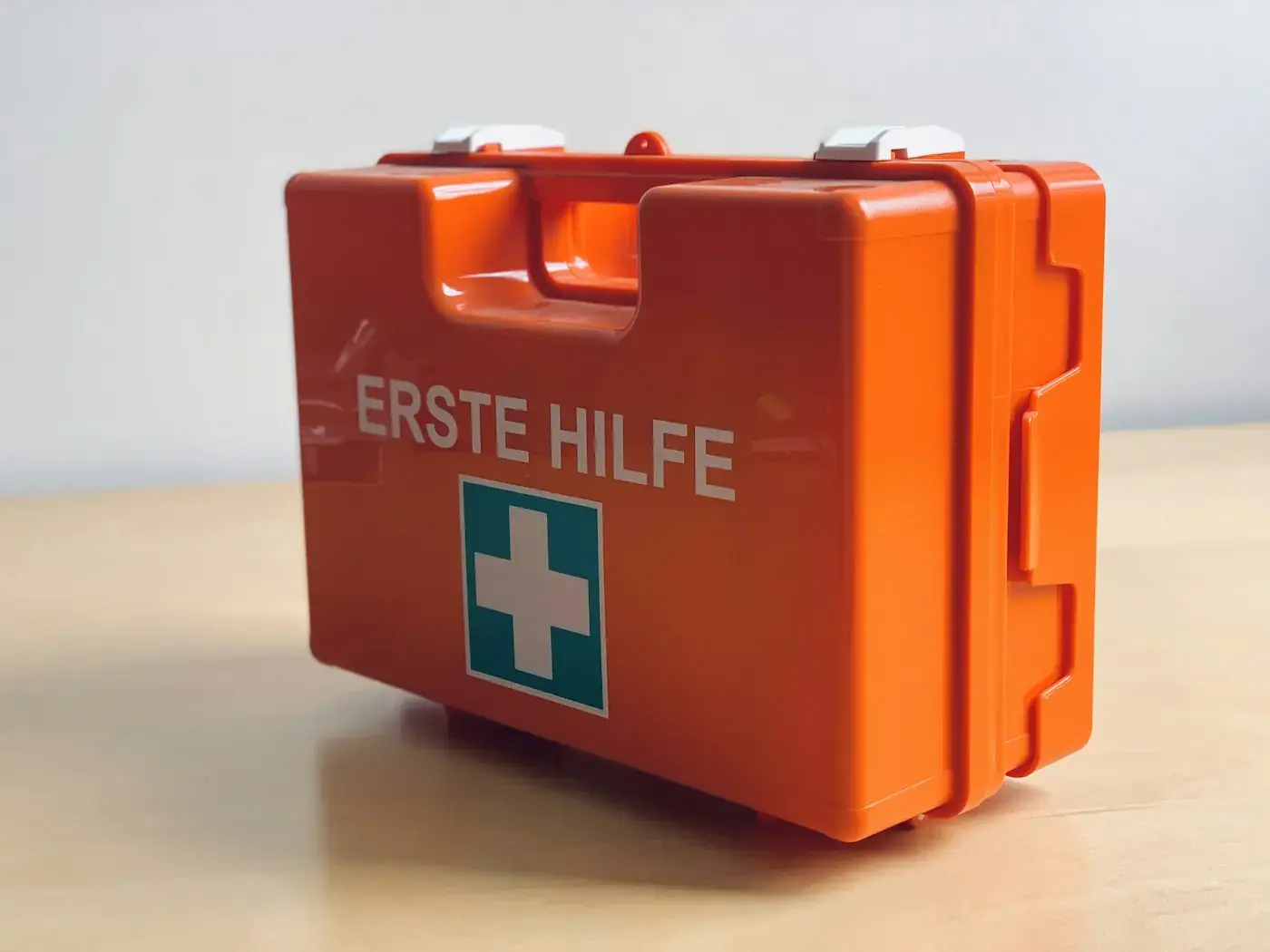
Photo: Ploegerson on Unsplash
Which Occupational Diseases Are Reportable?
The reportable diseases are carpal tunnel syndrome, cramp of the hand or forearm, occupational dermatitis, hand-arm vibration syndrome, occupational asthma, and tendonitis or tenosynovitis of the hand or forearm. Cancers linked to work exposure to a known carcinogen or mutagen (such as mesothelioma after exposure to asbestos), and any disease caused by work exposure to a biological agent, are reportable too.
Each is only reportable when linked to the kind of work that causes it. Carpal tunnel syndrome, for example, is reportable where the work involves regular use of vibrating tools, not typing. HSE’s occupational diseases page sets out the work activity for each. If your team handles chemicals, our guide to what COSHH is explains how to stop dermatitis and asthma happening in the first place.
What Is a Dangerous Occurrence?
Dangerous occurrences are near misses that are serious enough to report even when nobody is hurt. Schedule 2 of RIDDOR lists them. The ones most workplaces could meet include:
- the collapse, overturning or failure of any load-bearing part of lifting equipment
- plant or equipment accidentally touching, or causing an electrical discharge from, an uninsulated overhead power line of more than 200 volts
- a fire or explosion caused by an electrical short circuit or overload that stops the plant for more than 24 hours or causes a significant risk of death
- the accidental release of a substance that could injure someone, or of a biological agent likely to cause severe infection or illness
- the complete or partial collapse of a substantial part of a scaffold more than five metres high
Other near misses are not reportable, but record them anyway. They are the cheapest warning you will get, and they should feed straight back into your risk assessments.
How Do You Make a RIDDOR Report?
- Deal with the incident first. Get first aid or emergency help, make the area safe and keep the scene undisturbed where you can.
- Decide whether it is reportable, using the table at the top of this page.
- Report it online using the right form on the HSE website: injury, dangerous occurrence, case of disease, flammable gas incident or dangerous gas fitting. You can download a copy of the submitted report for your records.
- Or phone, for fatal and specified injuries only. The HSE Incident Contact Centre is on 0345 300 9923, open Monday to Friday, 8.30am to 5pm at the time of writing. Outside those hours, report online.
- Record it and investigate.
Online reports go into HSE’s RIDDOR database, even if your local council is your enforcing authority.
Who Is the Responsible Person?
RIDDOR puts the duty on the responsible person. In practice:
- for an employee: the employer
- for a self-employed person: the self-employed person themselves, or the person in control of the premises where they were working
- for a member of the public or other non-worker: the person in control of the premises where it happened
Employees don’t report to the HSE themselves. Their job is to tell their employer straight away, so make internal reporting part of every induction.
What Records Do You Need to Keep?
You must keep a record of every reportable incident, plus any work accident that keeps a worker off, or unable to do their normal work, for more than three consecutive days. Over-three-day injuries are recorded, not reported (unless they go past seven days).
Keep each record for at least three years from the date you make it, at the workplace or your usual place of business. Include the date and method of reporting, the date, time and place of the event, the personal details of those involved, and a brief description of what happened. A copy of the online report counts, and so does an accident book that captures these details.
Is RIDDOR Different in Northern Ireland?
Yes. Northern Ireland still uses the Reporting of Injuries, Diseases and Dangerous Occurrences Regulations (Northern Ireland) 1997, enforced by HSENI. The 2012 and 2013 changes in Great Britain were not made there. The main differences:
- injuries that keep someone off work for more than three days are still reportable, within 10 days
- the list is of “major injuries” rather than specified injuries
- reports go to HSENI, not the HSE
Is RIDDOR Changing?
Not yet. At the time of writing (November 2026), legislation.gov.uk lists no amendments to the 2013 Regulations waiting to come into force, so the rules above still apply. To confirm: Writer recalled an HSE consultation on RIDDOR reform (April to June 2026, more diseases and dangerous occurrences). HSE's RIDDOR pages do not mention it and consultations.hse.gov.uk could not be reached to confirm. Confirm dates and scope before describing it. Check the HSE’s RIDDOR pages before you update your procedures.
What to Do Next
This week, check three things. Does everyone know how to report an incident to their manager? Does each manager know the 10-day and 15-day deadlines and who sends the report? Is your accident record kept somewhere you can find it for three years?
If the honest answer to any of those is “not sure”, start with the Health and Safety at Work Act 1974 guide for the wider picture, then look at health and safety training for your managers and team.