
Is a Fire Risk Assessment a Legal Requirement?
Yes. In England and Wales, article 9 of the Regulatory Reform (Fire Safety) Order 2005 says the responsible person “must make a suitable and sufficient assessment of the risks” so they can identify the fire precautions they need. It applies to all workplaces and commercial premises, premises the public can visit, and the common areas of blocks of flats.
The assessment is the foundation for everything else in fire safety law: your escape routes, alarms, extinguishers, emergency plan, training and the number of fire marshals you need. Our pillar guide to fire marshal and fire warden duties shows how those duties follow from it, and our fire marshal training prepares the people who carry the plan out.
Who Is Responsible for the Fire Risk Assessment?
The responsible person. Under article 3, in a workplace that is the employer, so far as the workplace is under their control. Elsewhere it is whoever controls the premises for their business, or the owner.
GOV.UK adds that an owner, landlord, occupier or anyone else with control, such as a facilities manager or managing agent, can also be a responsible person. In shared buildings there is usually more than one, and since October 2023 each must take reasonable steps to find the others, swap names and a UK address for notices, record which part of the building they are responsible for, and co-ordinate their fire safety arrangements.
The 5 Steps of a Fire Risk Assessment
GOV.UK sets out five steps (summarised in the table above):
- Identify the fire hazards. HSE puts it simply: a fire needs a source of ignition, a source of fuel and oxygen. List what could start a fire and what would burn.
- Identify people at risk. Think about where people are, who doesn’t know the building, and who might struggle to get out.
- Evaluate, remove or reduce the risks. Keep ignition and fuel apart, then check your detection and warning systems, firefighting equipment, escape routes and emergency lighting are adequate.
- Record your findings, prepare an emergency plan and provide training.
- Review and update the assessment regularly.
It follows the same logic as the HSE’s five steps to risk assessment, with a fire focus. GOV.UK publishes guides for different premises, from offices and shops to factories, care homes and places of assembly.
Does a Fire Risk Assessment Have to Be Written Down?
In England and Wales, yes, whatever the size of your business. The Building Safety Act 2022 amended the Order from 1 October 2023. Article 9(6) now says that as soon as practicable after the assessment is made or reviewed, the responsible person must make a record of it, including:
- the findings, and the measures taken or to be taken;
- any group of people identified as especially at risk.
Before the change, only businesses with five or more employees, licensed premises or those under an alterations notice had to record “significant findings”. Both limits have gone. Article 11 now also requires you to record your fire safety arrangements, which means how you plan, organise, monitor and review your fire precautions.
The Home Office guidance on section 156 says the assessment must be recorded in full, and that if you use a fire risk assessor you should record their name and, where applicable, their organisation. If you hand the premises over to a new responsible person, you must pass on your records.
Some older government guides still mention the five-employee rule. They were written before 2023, so follow the current law.
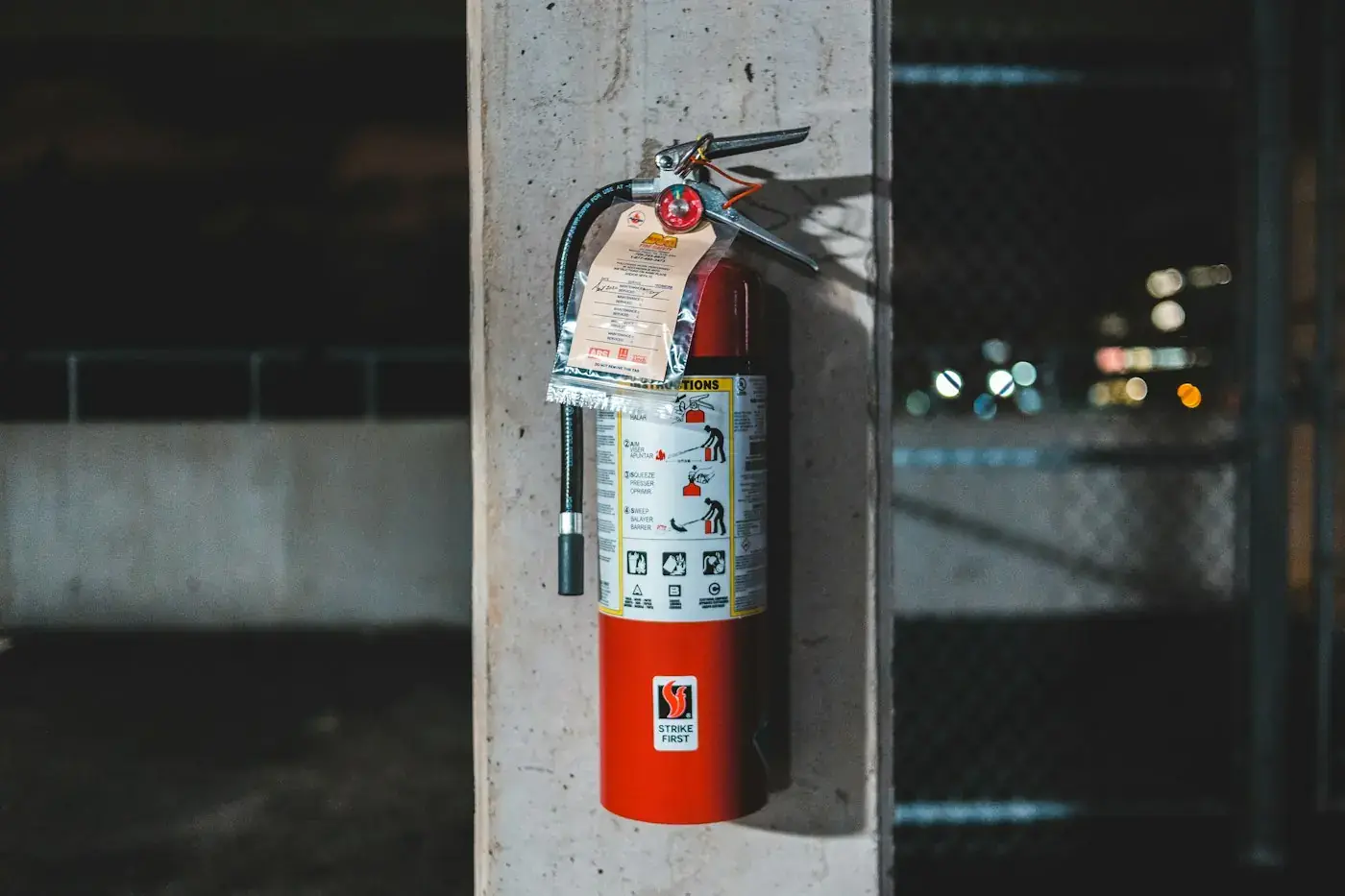
Photo: Erik Mclean on Unsplash
Who Can Carry Out a Fire Risk Assessment?
You can do it yourself. GOV.UK says the responsible person can carry it out using the standard fire safety risk assessment guides. If you don’t have the expertise or time, you need to appoint a competent person to help, such as a professional risk assessor. Your fire and rescue authority may give advice, but it cannot do the assessment for you.
The Building Safety Act also adds a new article 9A, which says you must not appoint someone to help with the assessment unless they are competent: they must have sufficient training and experience or knowledge and other qualities. The Home Office guidance says this will be brought into force at a later date,, and at the time of writing (November 2026) it does not appear in the current text of the Order on legislation.gov.uk. Until it does, the government recommends you check any assessor’s competence anyway. Whoever does the work, the responsible person still has to make sure the assessment is suitable and sufficient.
How Often Should a Fire Risk Assessment Be Reviewed?
The law sets no fixed interval. Article 9(3) requires a review “regularly so as to keep it up to date”, and in particular if there is reason to suspect it is no longer valid or there has been a significant change. The Home Office guide for offices and shops lists typical triggers:
- changes to work processes or new equipment;
- building alterations or a new internal layout;
- more hazardous substances stored or used;
- a failure of fire precautions, such as the alarm or detection system;
- a significant increase in the number of people present;
- the presence of people with a disability.
A fire or near miss is also a sign the assessment may be inadequate. Record each review, because article 9(6) applies to reviews as well.
Sharing the Findings With Staff and Residents
Under article 19, you must give employees clear, relevant information on the risks the assessment found, the precautions in place, the emergency procedures and who your nominated fire marshals are. If you employ a child, you must give the information to a parent first.
Buildings with two or more homes have extra duties. Since October 2023, article 21A requires the responsible person to give residents the risks identified by the assessment, the fire safety measures, the responsible person’s name and UK address, and who helped with the assessment. In England, the Fire Safety (England) Regulations 2022, in force since 23 January 2023, add fire safety instructions and fire door information for residents, and fire door checks in buildings over 11 metres. They don’t apply to an ordinary workplace.
Scotland and Northern Ireland
Scotland and Northern Ireland have their own law: the Fire (Scotland) Act 2005 with the Fire Safety (Scotland) Regulations 2006, and the Fire and Rescue Services (Northern Ireland) Order 2006 with the Fire Safety Regulations (Northern Ireland) 2010. Both require a fire risk assessment and regular review. The 2023 recording change did not extend there: under regulation 8 in Scotland and regulation 8 in Northern Ireland, you must record the specified information if you employ five or more people, need a licence or registration, or an alterations notice requires it.
What Happens If You Don’t Have One?
Your local fire and rescue authority can inspect your premises and ask to see the assessment. It can give informal advice, or issue an alterations notice, an enforcement notice setting out what must improve and by when, or a prohibition notice restricting use of the premises with immediate effect. You can appeal to the magistrates’ court within 21 days.
Under article 32, failing to comply with your fire safety duties is an offence where it puts people at risk of death or serious injury in case of fire. On conviction in the Crown Court, the penalty can be an unlimited fine, up to two years in prison, or both. GOV.UK summarises it as minor penalties of up to £5,000 and major penalties with unlimited fines and up to two years in prison.
What to Do Next
This week:
- Find your fire risk assessment and check its date, who wrote it and whether it is recorded in full.
- Walk the building with it. Does it still match the layout, the people and what you store?
- Check the actions it lists have names and dates against them, and have been done.
- Make sure it says how many fire marshals you need and that you have them on every shift.
- Put a review date in the diary.
To record it in full, use our free fire risk assessment template below: it follows the five GOV.UK steps and includes an action plan, emergency plan, training record and review log.
Our free risk assessment template works for your general risk assessment alongside it. And when your fire marshals need training, our online fire marshal course covers their duties, from daily checks to the roll call.