
Buy Online
Infection Control. Buy in our course store and start straight away: about 1 hour.
ONLINE COURSE
Our online infection control training explains how infections spread and how to stop them: the different microorganisms, how bacteria are transmitted, the chain of infection, and cleaning and decontamination. It’s for care and support workers and anyone else working in health and care settings. It’s CPD-accredited and self-paced, with a certificate on completion, and the first module is free to try.
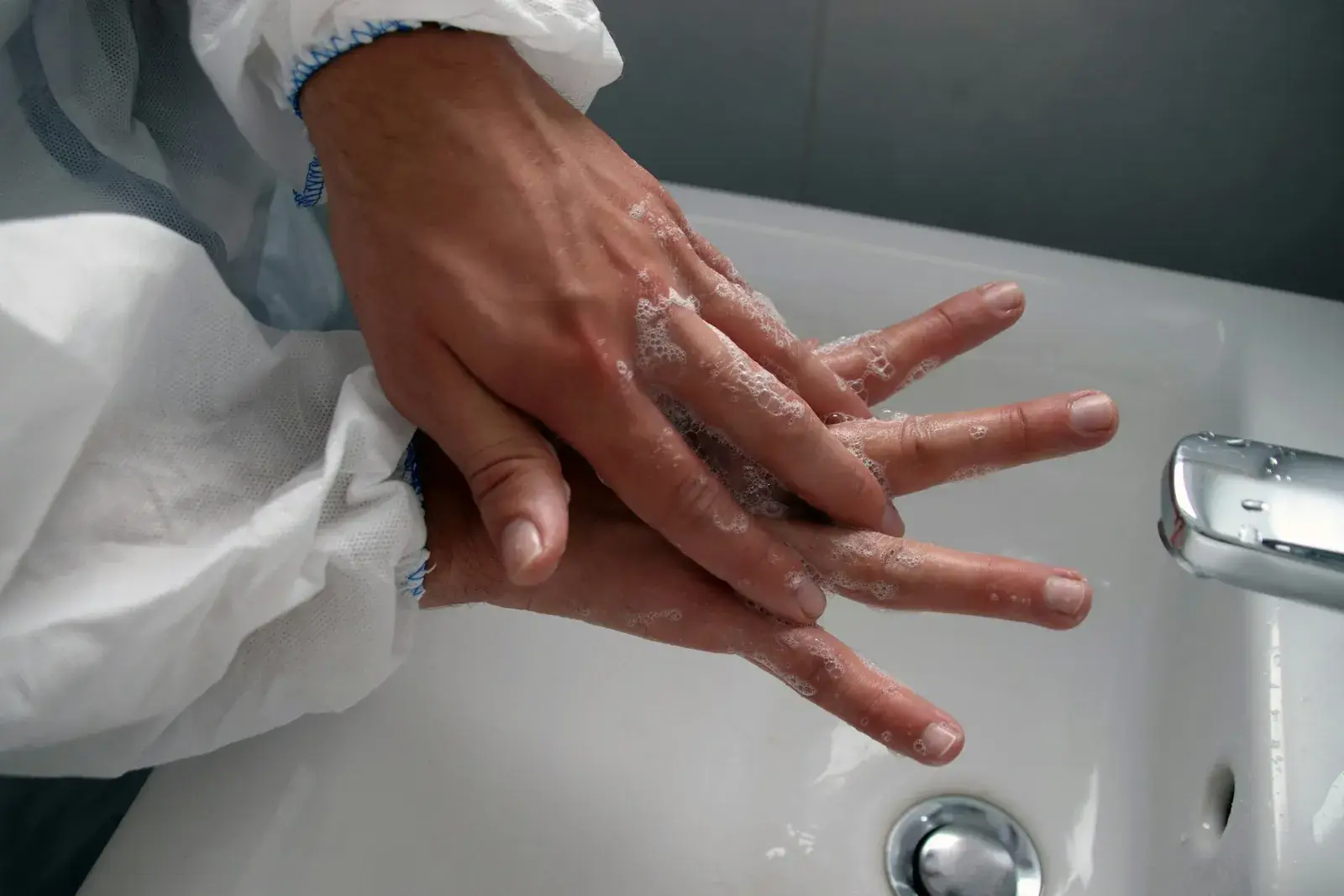
Photo: Maskmedicare Shop on Unsplash
Infection control training, often called infection prevention and control (IPC) training, teaches staff how infections are caused and spread and the everyday practices that stop them, such as hand hygiene, protective equipment and cleaning. In care settings it protects the people you support, who may be more vulnerable to infection, and your staff.
For CQC-registered providers, regulation 12 requires them to assess the risk of, prevent, detect and control the spread of infections. The Code of Practice, which CQC takes into account, says IPC should be in induction programmes, that all staff and volunteers should have continual IPC training suited to their role, and that training records are kept.
Online training is a good way to give everyone the knowledge and keep it current. It isn’t the whole picture. The Code of Practice says staff who carry out procedures needing skills such as aseptic technique must be trained and show proficiency first, and providers should regularly assess staff IPC skills in practice.
Course facts
Seven short video modules, each with questions to check understanding (70% pass mark).
What IPC means, and the impact of good and poor infection control on people, staff and services.
The legislation that applies to infection control at work.
Bacteria, viruses and the other organisms that cause infection.
The routes infection takes from one person or surface to another.
The links in the chain, and how breaking any one of them stops an infection spreading.
The everyday control measures that keep infection out of your setting.
Keeping the environment and equipment clean and decontaminated.
Regulation 12 of the Health and Social Care Act 2008 (Regulated Activities) Regulations 2014 covers safe care and treatment. Part 12(2)(h) requires providers to assess the risk of, and prevent, detect and control the spread of, infections, including those that are health care associated.
CQC’s guidance points providers to the Code of Practice on the prevention and control of infections. Providers don’t have to follow the Code by law, but CQC must take it into account, and following it is a clear way to show you meet the regulation. On training, the Code says:
Our guide to care home training and CQC covers the rest of a care team’s mandatory training.
For the knowledge, yes: an online course gives every member of staff the same grounding and a certificate for your records. For practice, no course can do it alone. The Code of Practice says skills such as aseptic technique need training and demonstrated proficiency before staff do them independently, and Skills for Care says Care Certificate standards are assessed on what workers know and what they do. Use this course for the knowledge, then observe hand hygiene, PPE and cleaning on the job.
Try before you buy
See how the Infection Control course works before you pay. Tell us where to send it and we’ll give you free access to the first module straight away.
Buy for one person in a couple of minutes, or talk to us about a team.
CLARITY
In CQC-registered services, the Code of Practice expects IPC training for all staff and volunteers, with content that reflects each person’s role. That means care and support workers and every other role in the service, such as housekeeping and catering staff. The Code also expects contractors and volunteers to be aware of their IPC responsibilities.
The Code of Practice asks for a continual programme of IPC training and for providers to review and update training regularly, but it doesn’t set a fixed interval. Base it on your risk assessment, and refresh it when guidance, procedures or someone’s role changes.
It can support the infection prevention and control knowledge that new care workers need. It isn’t the Care Certificate. Skills for Care says workers must be assessed on what they know and what they do, by someone with direct experience of what they’re assessing, so the employer still observes competence.
Yes. HSE says COSHH covers substances hazardous to health, including chemicals, products containing chemicals and biological agents (germs). If a cleaning or disinfection product’s packaging has any hazard symbols, HSE classes it as a hazardous substance. If your team handles cleaning chemicals, add COSHH training alongside this course.
Yes. Enrol everyone on our e-learning platform, see who has finished and download certificates, which helps you keep the training records the Code of Practice asks for. Use the form on this page and we’ll send team pricing within one working day.
Training more than a few people on Infection Control? Tell us how many and we’ll send team pricing within one working day.
Buy the course online and start today, or tell us how many staff need infection control training and we’ll send team pricing within one working day.
Buy OnlineWe reply within one working day.